

Design and production process for a kitchen in Switzerland
This kitchen is located in a residential area in Geneva with stunning views of the lake. Let’s follow the steps of the design and production process to see the before and after of this Swiss kitchen. One of the unique features is that the work was largely done remotely, as it was designed in Barcelona. For this reason, the renderings, which are computer-generated images that allow us to see how the kitchen will look after completion, were very close to reality. In other words, there was little room for maneuver, and for this reason, every inch was carefully considered. In terms of space, the kitchen has a dumbwaiter that connects it to the other floors of the house. Furthermore, the perimeter of the kitchen is irregular, so it was also necessary to make adjustments and adapt to the sharp angles of the walls.
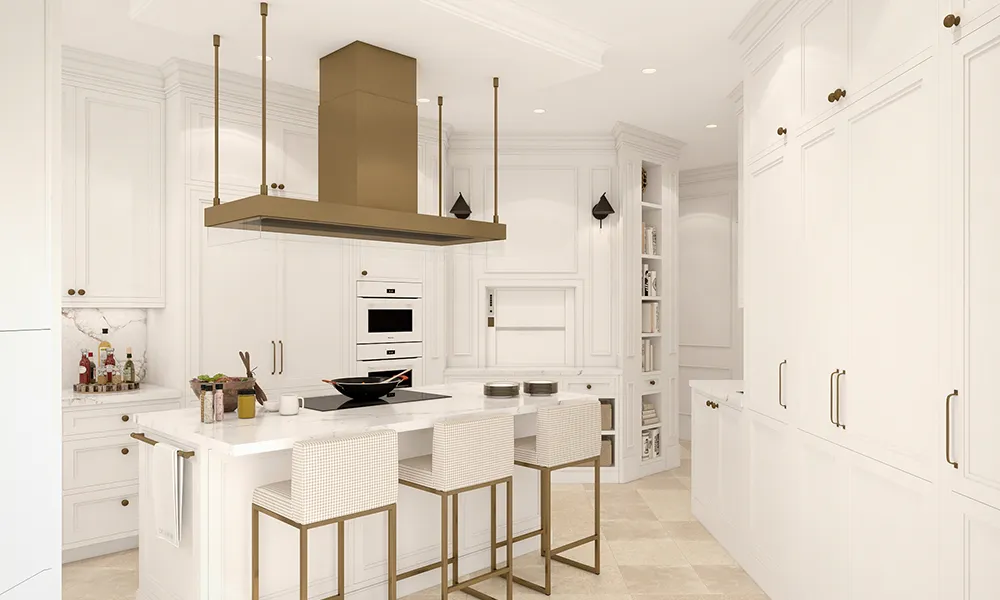
In the center of the kitchen there is a large island crowned by a large brass hood. After suggesting several extractor solutions, the clients settled on this magnificent Italian piece, which gives the kitchen a lot of personality and accentuates the rest of the elements. Indeed, both the taps and the handles are made of brass.
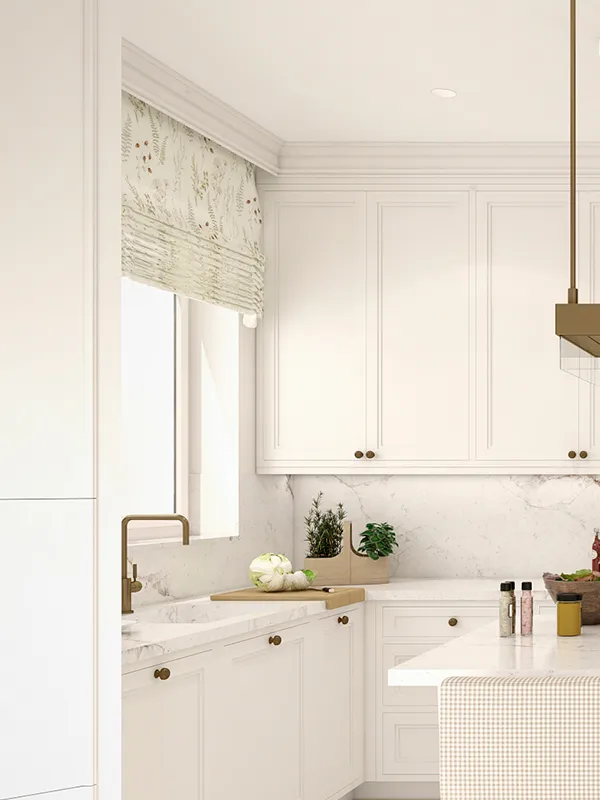
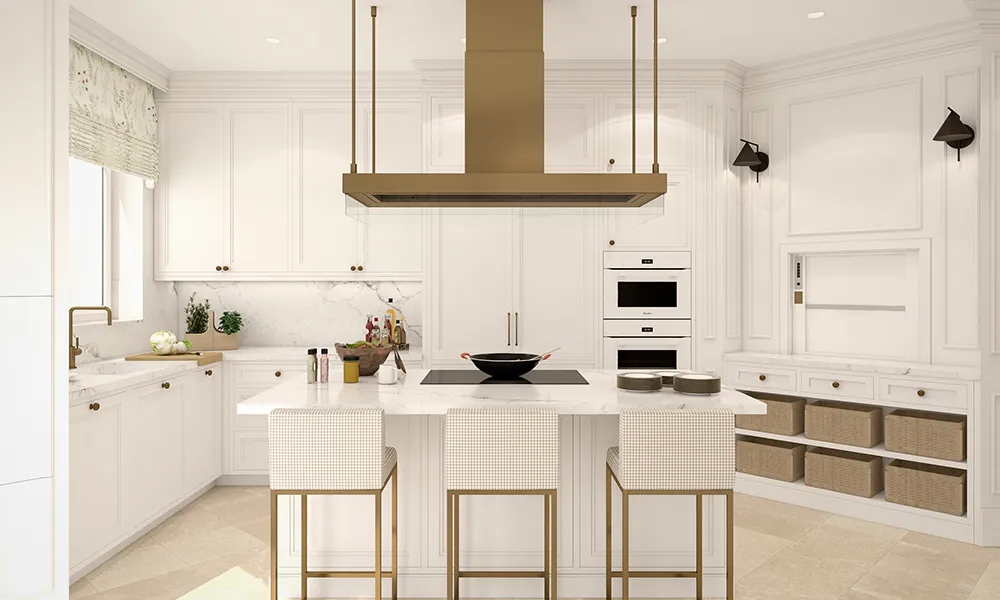
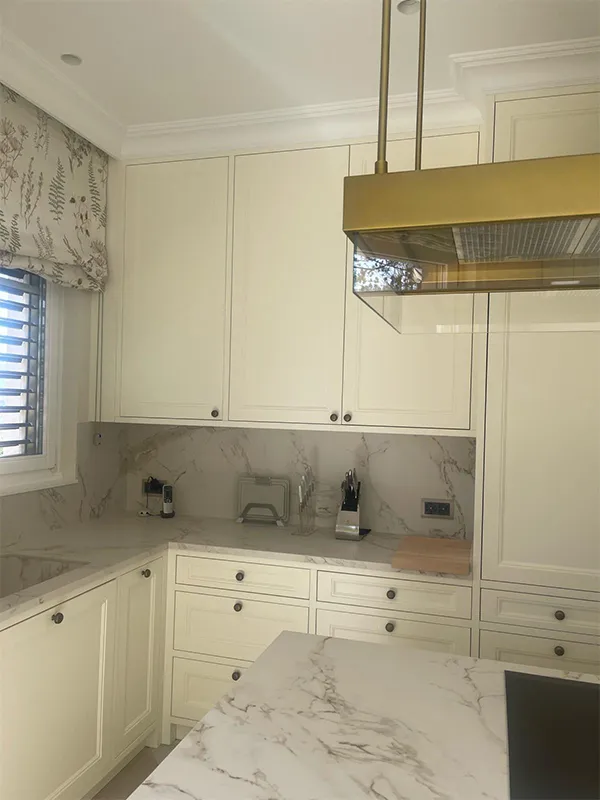 The cooking island features a large hood. Behind the stove are the fronts with the ovens and a cabinet with a retractable door for storing small appliances.
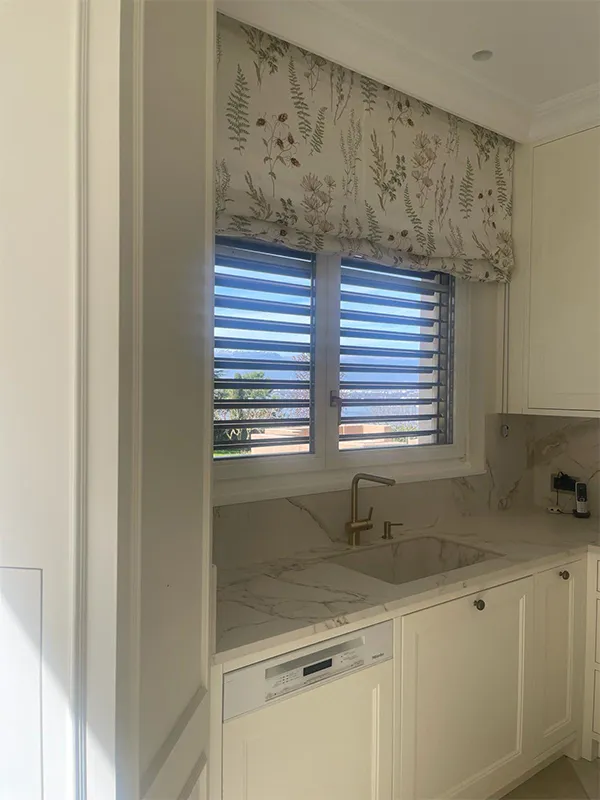 We have the water point and dishwasher integrated under the window. It's worth mentioning that it was difficult to find a faucet at the right height given the proximity of the window. You can also see that the perimeter cornice, at window height, is set forward to create a curtain rod.
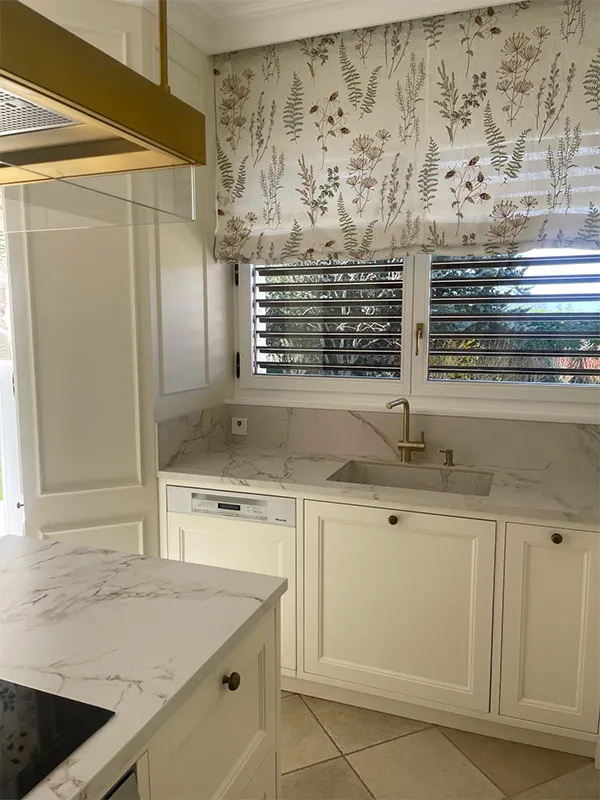 The curtains, seen up close, are embroidered and add a very personal touch to the room. The curtains are made of Dekton-Entzo, a very modern material that is particularly durable and beautiful.
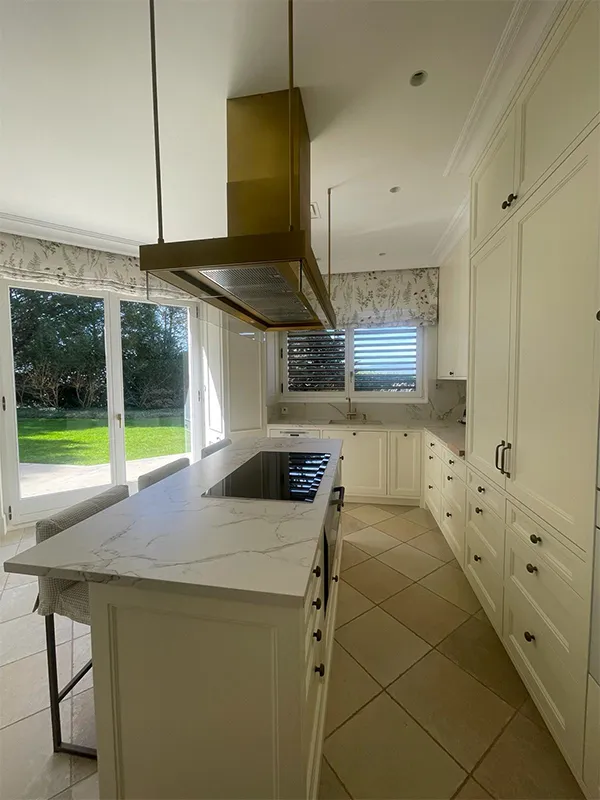 Since the walls were uneven, the decision was made to lay the tiles diagonally. The tiles are Italian stoneware with a shade-shifting natural stone look. The exit leads to the garden, so the floor had to be very durable. We must bear in mind that the kitchen has four doors leading to different types of flooring, so we had to find a floor that would blend harmoniously with the rest of the space.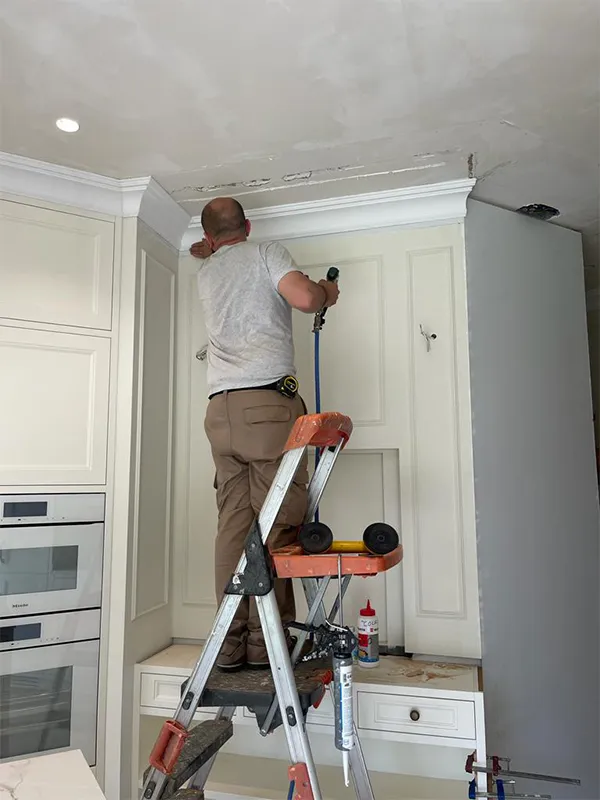
One characteristic of this kitchen is that all the walls are paneled with molded wood. The cornices and walls are the same color as the cabinets, an off-white. However, they all have so many irregular angles that it was a very laborious task to maintain symmetry and harmony.
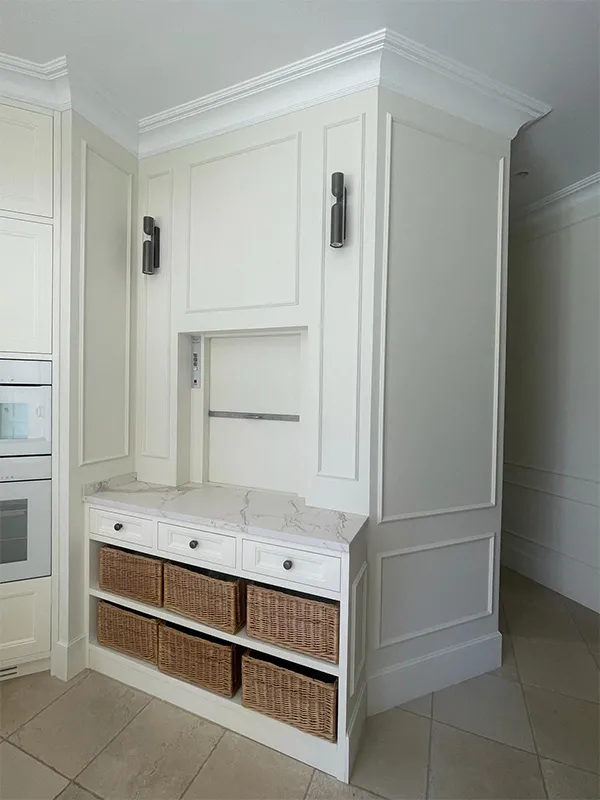 The client wanted a space to store tubers and fruit in a ventilated area, so these wicker baskets were placed under the cabinet.
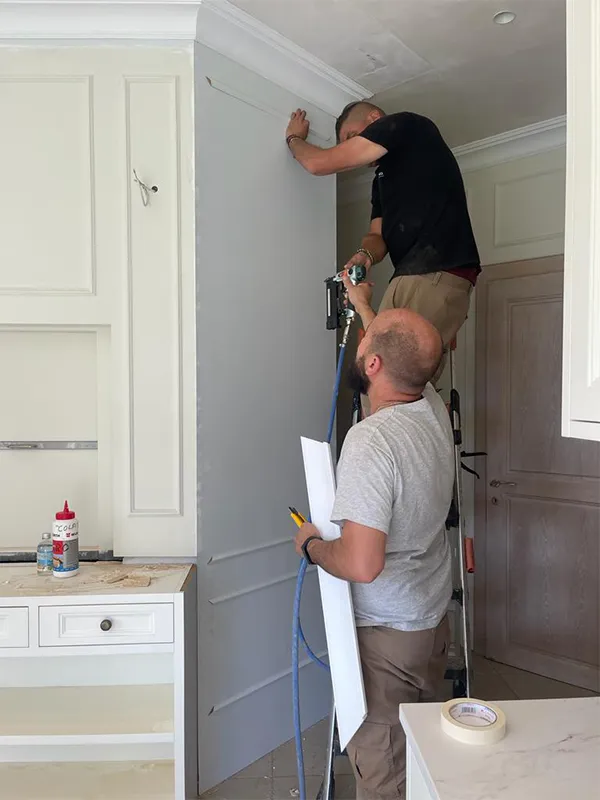 The workers are installing the cornices and you can see how they are covering the walls.
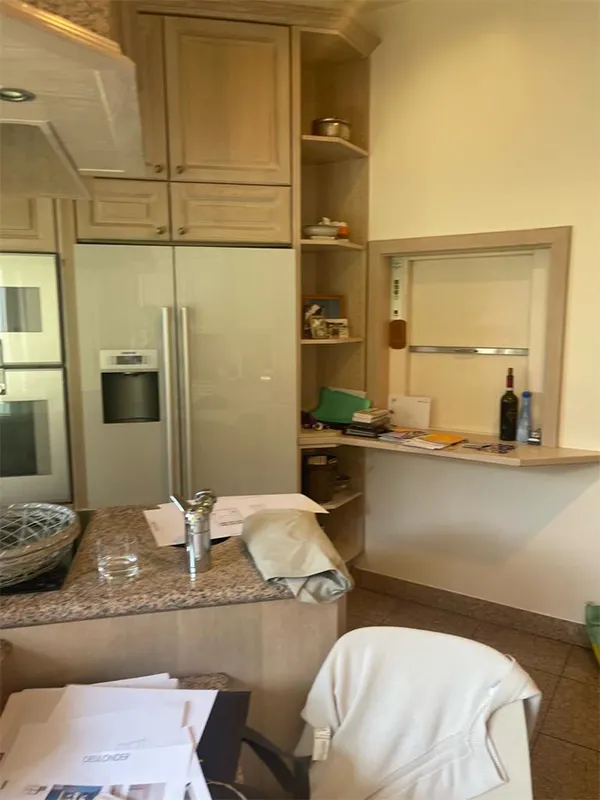 We've moved the refrigerator from where it originally was and installed a cabinet with two retractable doors to store small appliances.
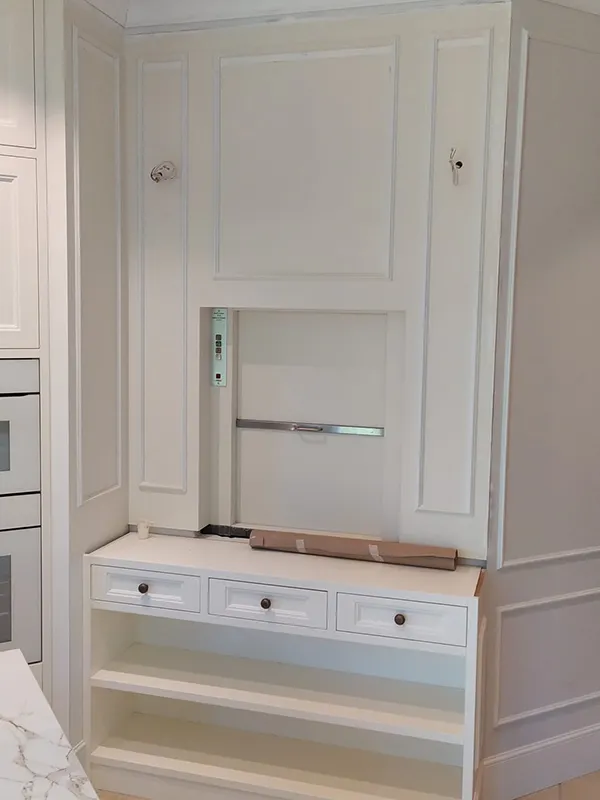 In the dumbwaiter area, with the same shade of white as the rest of the furniture, a low cabinet has been installed.
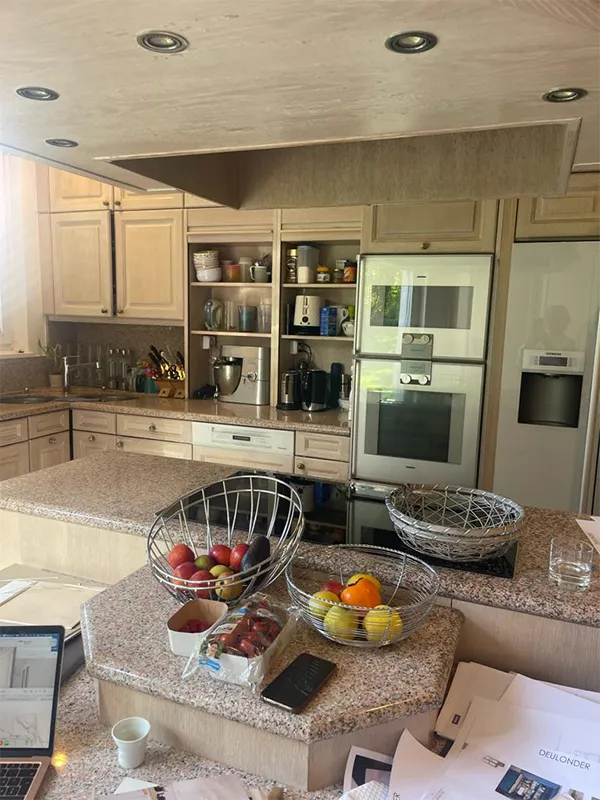 This is what the kitchen looked like before the renovation. It was wood-colored and had granite countertops, but it was dark and impractical. There was a lot of wasted space.
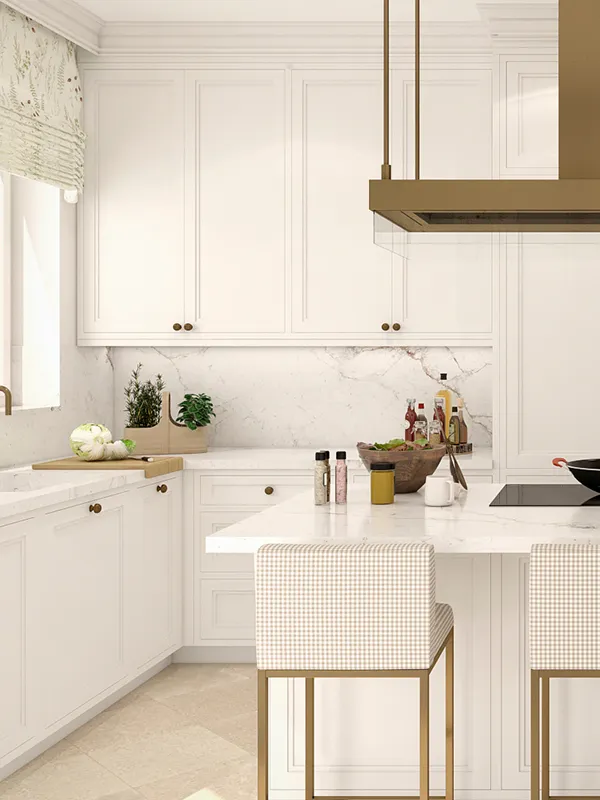 On the right, beneath the cutting board, are the recycling bins, which are strictly observed in Switzerland.
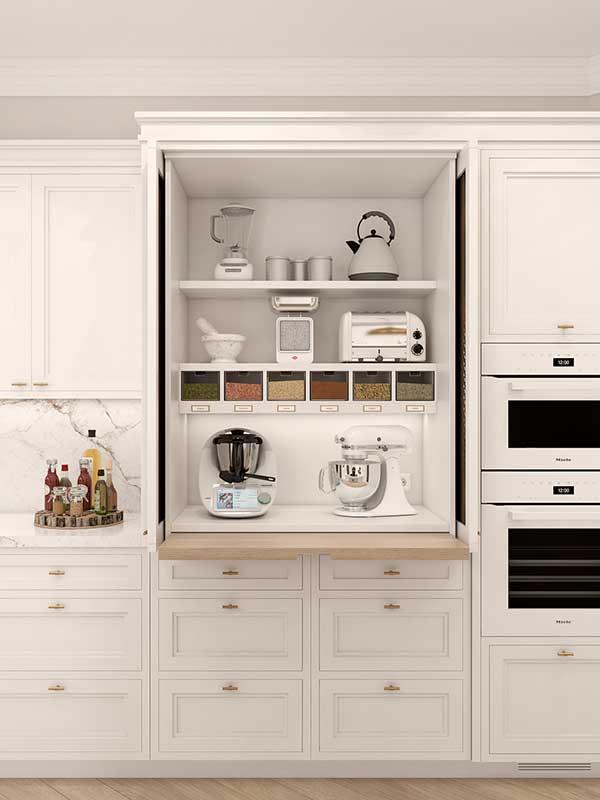 View of the small appliance cabinet option with six ingredient drawers. The door is retractable and also has a removable shelf.
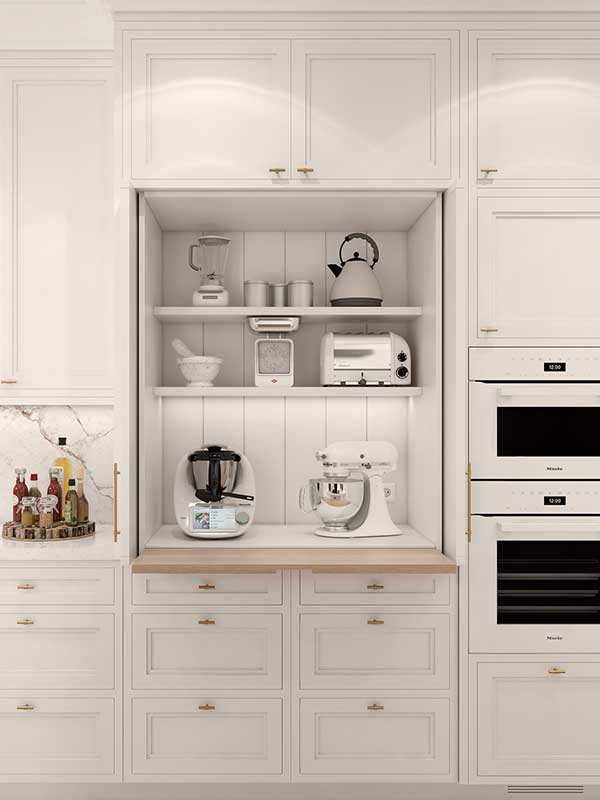 View of the small appliance cabinet, option without drawers. The slats can be seen in the background.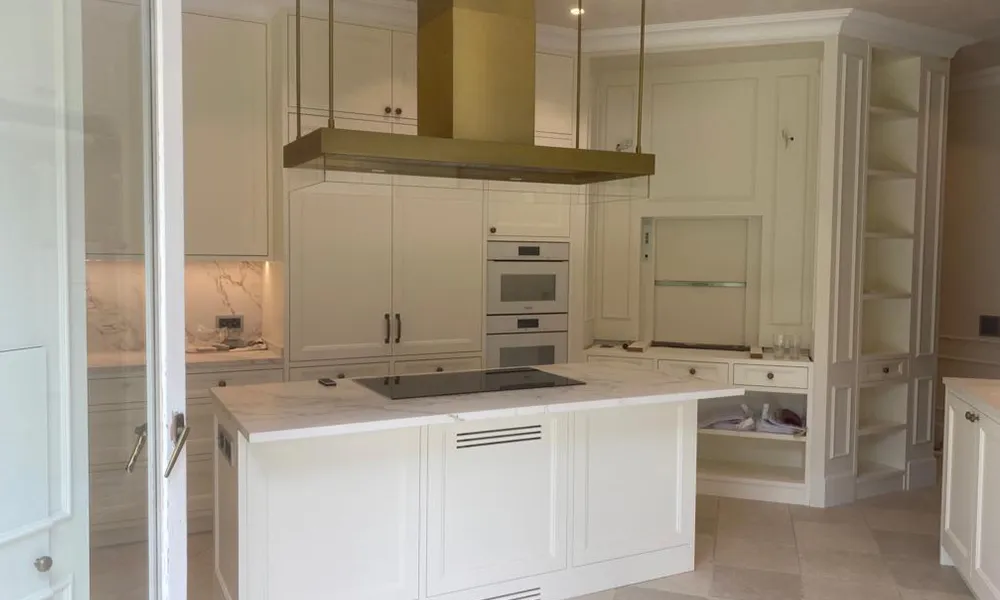
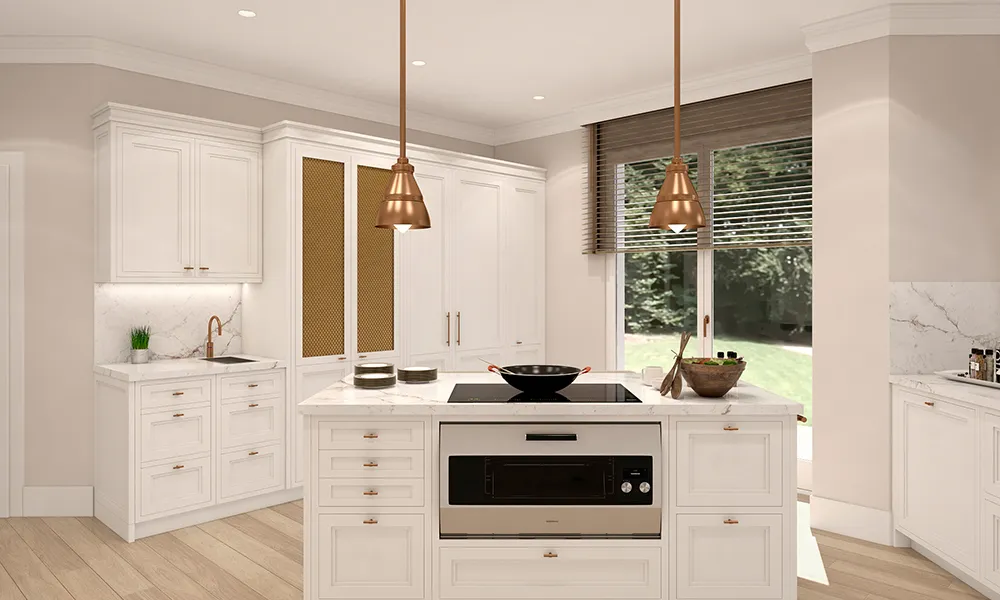 Several lighting proposals were played with above the central island.
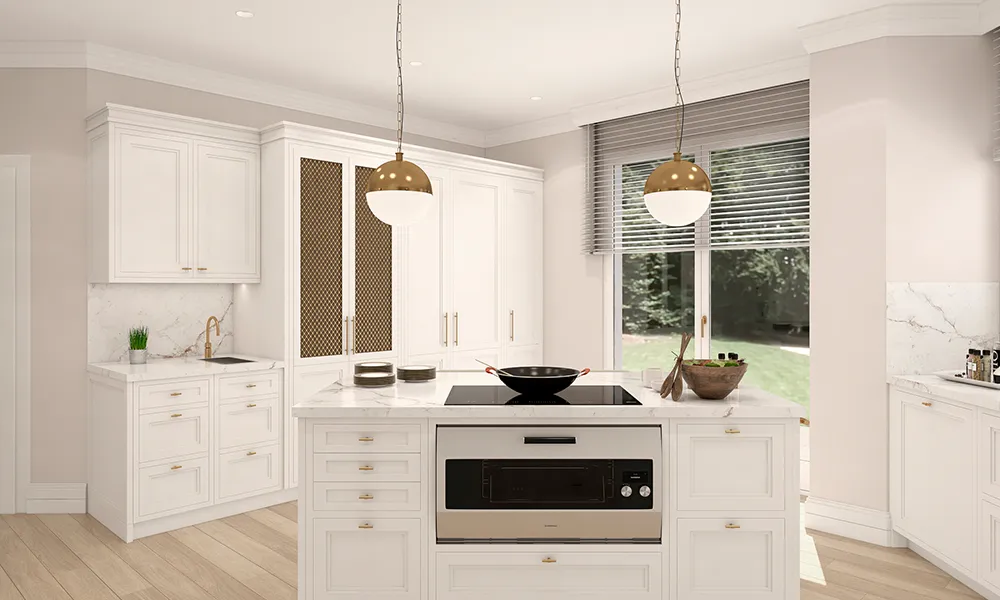 Another option, as can be seen in this rendering, included two designer lamps to illuminate the island.
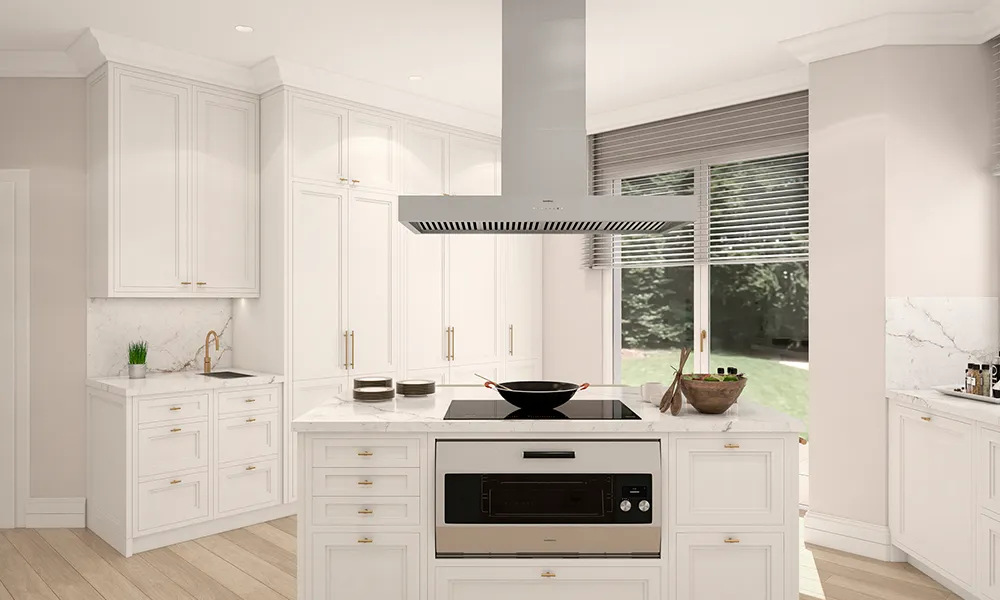 Thanks to the renderings, you can see different proposed solutions for the hoods, such as the one here in stainless steel.
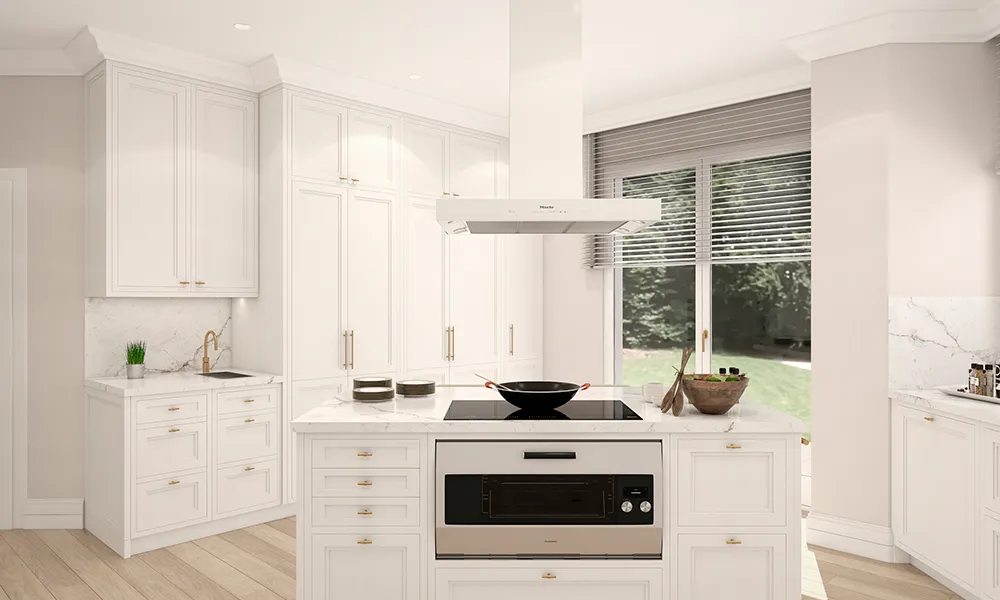 In this version, a white hood was proposed to match the kitchen furniture.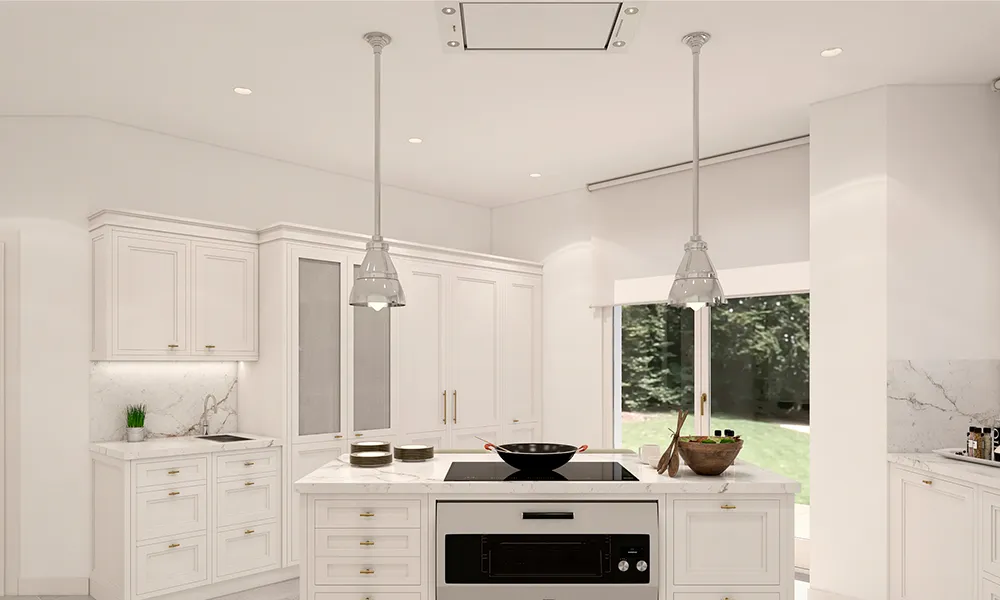
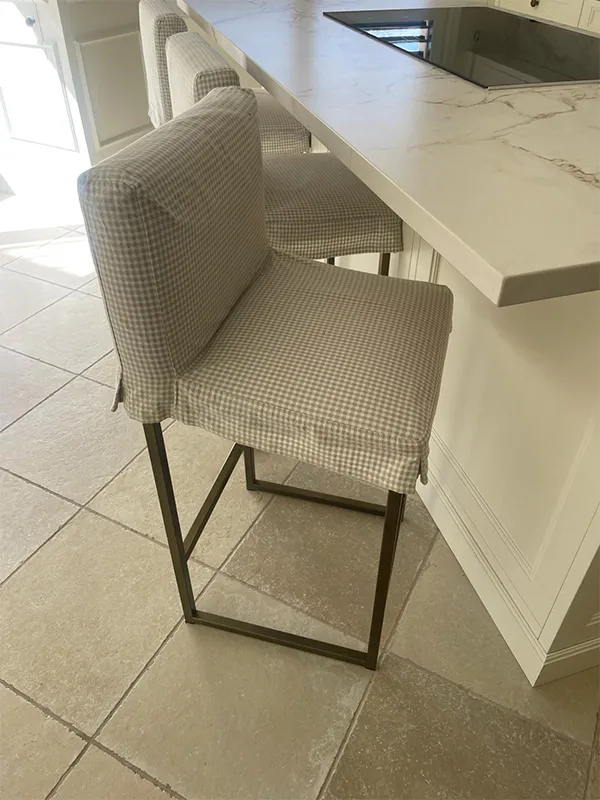 Detail of the stool, whose covers are removable for easy washing. The legs have a brass finish that matches the hood and handles.
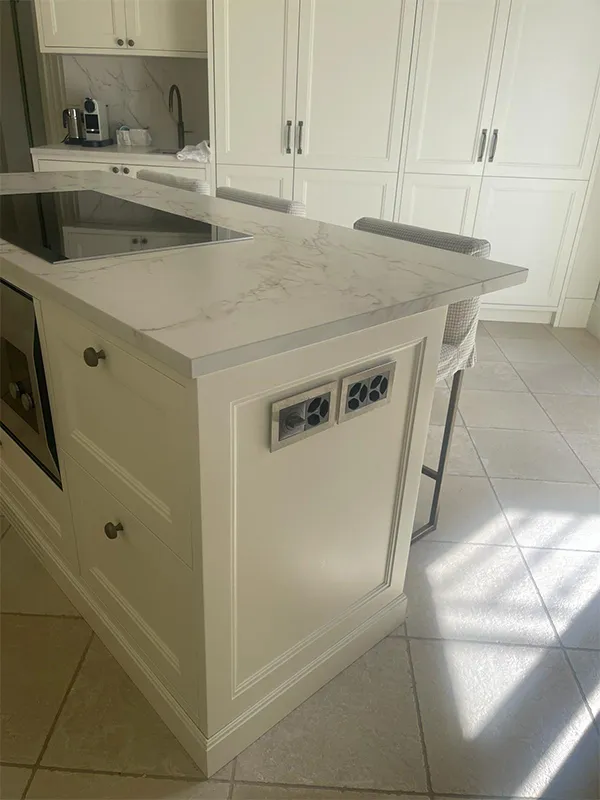 The island has several outlets installed on one side and also has a floating bar area for casual dining on stools.
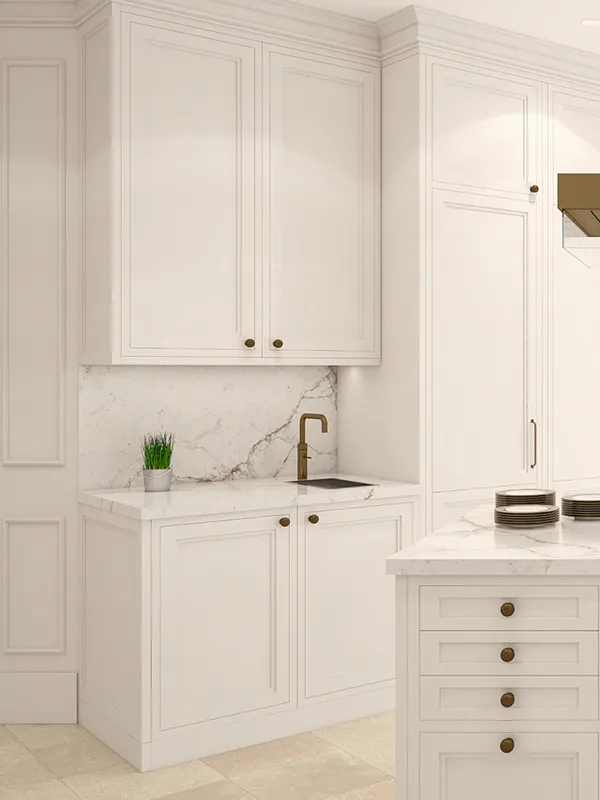 This space houses the coffee maker and has an auxiliary water point.
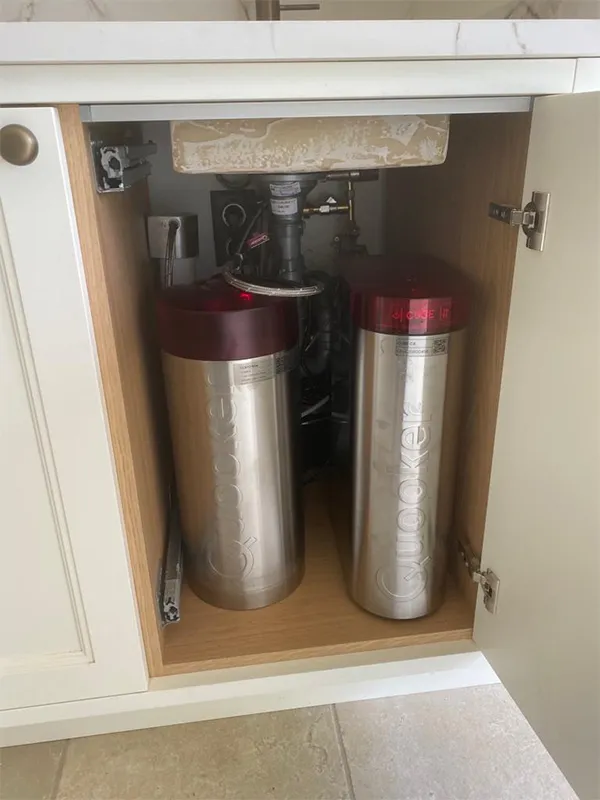 The kitchen is equipped with a Quooker faucet, which provides sparkling, still, cold, and boiling water, ideal for preparing tea. It's also an eco-friendly system that eliminates the use of plastic bottles.